



ALDH3
ALDH3A1 (aldehyde dehydrogenase 3A1) is a cytoplasmic NAD(P)+-dependent enzyme that oxidizes medium-chain aliphatic and aromatic aldehydes into their corresponding carboxylic acids, thereby supporting cellular aldehyde detoxification and antioxidant defense mechanisms[1][2]. Mechanistically, ALDH3A1 removes reactive aldehydes generated during lipid peroxidation and environmental stress exposure, limiting oxidative damage and contributing to cellular homeostasis in tissues such as the cornea, lung, skin, bladder, and stomach that are continuously exposed to exogenous stressors[1][3]. In disease-associated models, ALDH3A1 regulates oxidative stress resistance and DNA damage responses, and its deficiency increases susceptibility to tissue injury, including corneal edema and clouding under physiological and ultraviolet stress conditions[1]. ALDH3A1 expression is also elevated in several malignancies, including gastric, lung, and prostate cancers, where it has been associated with cancer stem cell phenotypes, tumorigenesis, and therapeutic resistance[1][4]. Compared with related aldehyde dehydrogenase isoforms, ALDH3A1 shares less than 50% sequence similarity with ALDH1A1, supporting the development of isoform-selective pharmacological tools despite the conserved catalytic architecture of the ALDH family[5]. For experimental applications, selective ALDH3A1 inhibitors, including benzimidazole-derived compounds, have been developed to enhance cyclophosphamide or mafosfamide cytotoxicity in ALDH3A1-expressing cancer cells, providing a strategy for investigating ALDH3A1-mediated chemoresistance mechanisms[1][6].
References:
- [1]. Voulgaridou GP, et al. Identification of a peptide ligand for human ALDH3A1 through peptide phage display: Prediction and characterization of protein interaction sites and inhibition of ALDH3A1 enzymatic activity. Front Mol Biosci. 2023 Mar 20;10:1161111. [Content Brief]
- [2]. Pappa A, et al. Human aldehyde dehydrogenase 3A1 (ALDH3A1): biochemical characterization and immunohistochemical localization in the cornea. Biochem J. 2003 Dec 15;376(Pt 3):615-23. [Content Brief]
- [3]. Voulgaridou GP, et al. Aldehyde dehydrogenase 3A1 confers oxidative stress resistance accompanied by altered DNA damage response in human corneal epithelial cells. Free Radic Biol Med. 2020 Apr;150:66-74. [Content Brief]
- [4]. Yan J, et al. Aldehyde dehydrogenase 3A1 associates with prostate tumorigenesis. Br J Cancer. 2014 May 13;110(10):2593-603. [Content Brief]
- [5]. Tahiliani H, et al. Aldehyde dehydrogenases as drug targets for cancer: SAR and structural biology aspects for inhibitor design. Bioorg Chem. 2025 Jan;154:108019.
- [6]. Parajuli B, et al. Selective ALDH3A1 inhibition by benzimidazole analogues increase mafosfamide sensitivity in cancer cells. J Med Chem. 2014 Jan 23;57(2):449-61. [Content Brief]
All Product Categories
-
ALDH3 Related Products (9)
Related Products (9)

-
Antibodies (3)

-
Dyclonine hydrochloride
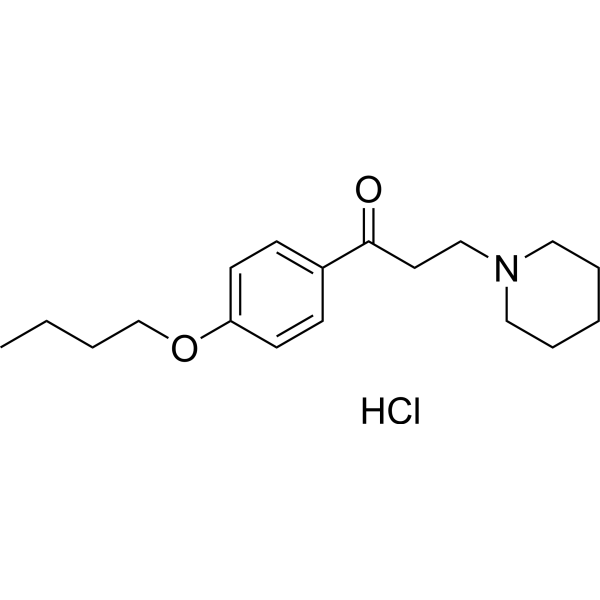 0 ImagesDyclonine hydrochloride (Dyclocaine hydrochloride) is an orally active, blood-brain barrier-permeable piperidine phenylacetone small molecule commonly used as a local anesthetic. Dyclonine hydrochloride acts as a highly selective allosteric antagonist of TRPV3; it also reversibly inhibits G9a, ALDH2 and ALDH3A1, non-competitively blocks AChE. Dyclonine hydrochloride activates the Nrf2/ARE pathway, relieves the epigenetic silencing of FXN, blocks Aβ42 aggregation, and promotes remyelination and reparative polarization of microglia. Dyclonine hydrochloride alleviates pruritus via TRPV3 inhibition; it is used in studies of neurodegenerative disease models based on its AChE inhibitory, antioxidant and remyelinating effects; it sensitizes drug-resistant tumors through ALDH inhibition, and combined use with protease inhibitors induces more tumor cell apoptosis; it inhibits Candida albicans in vitro. Dyclonine hydrochloride can be used for research on multiple diseases including neurodegenerative diseases, cancer and pruritic dermatitis.
-
ALDH3A1-IN-1
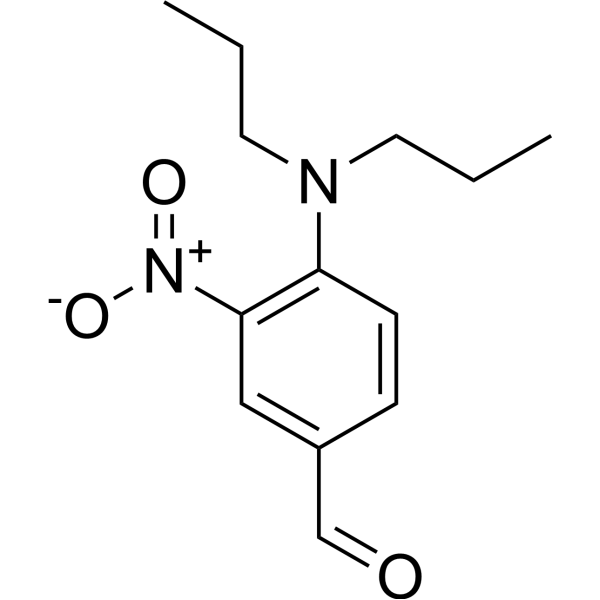 0 ImagesALDH3A1-IN-1 (Compound 18) is a potent inhibitor of ALDH3A1 with an IC50 of 1.61 μM. ALDH3A1-IN-1 is more potent than DEAB against patient-derived primary prostate tumor epithelial cells, as single agents or in combination research with docetaxel.
-
KS106
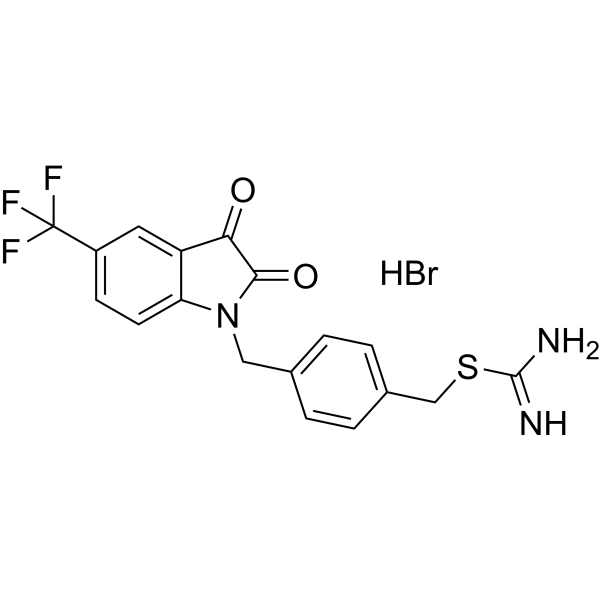 0 ImagesKS106 is a potent ALDH inhibitor with IC50s of 334, 2137, 360 nM for ALDH1A1, ALDH2, and ALDH3A1, respectively. KS106 shows antiproliferative and anticancer effects with low low toxic.KS106 significantly increases ROS activity, lipid peroxidation and toxic aldehyde accumulation. KS106 induces apoptosis and cell cycle arrest at the G2/M phase.
-
ALDH3A1-IN-4
 0 ImagesALDH3A1-IN-4 is a selective ALDH3A1 inhibitor with an IC50 of 0.2 μM. ALDH3A1-IN-4 binds to the aldehyde-binding pocket of ALDH3A1 via hydrophobic interactions and van der Waals forces. ALDH3A1-IN-4 acts as a chemosensitizer that sensitizes ALDH3A1-expressing cancer cells to the antiproliferative effect of mafosfamide, but does not produce a sensitizing effect on non-cancer cells that do not express ALDH3A1. ALDH3A1-IN-4 is applicable to research related to lung adenocarcinoma and glioblastoma.
-
Dyclonine
 0 ImagesDyclonine (Dyclocaine) is an orally active, blood-brain barrier-permeable piperidine phenylacetone small molecule commonly used as a local anesthetic. Dyclonine acts as a highly selective allosteric antagonist of TRPV3; it also reversibly inhibits G9a, ALDH2 and ALDH3A1, non-competitively blocks AChE. Dyclonine activates the Nrf2/ARE pathway, relieves the epigenetic silencing of FXN, blocks Aβ42 aggregation, and promotes remyelination and reparative polarization of microglia. Dyclonine alleviates pruritus via TRPV3 inhibition; it is used in studies of neurodegenerative disease models based on its AChE inhibitory, antioxidant and remyelinating effects; it sensitizes drug-resistant tumors through ALDH inhibition, and combined use with protease inhibitors induces more tumor cell apoptosis; it inhibits Candida albicans in vitro. Dyclonine can be used for research on multiple diseases including neurodegenerative diseases, cancer and pruritic dermatitis.
-
Dyclonine-d9 hydrochloride
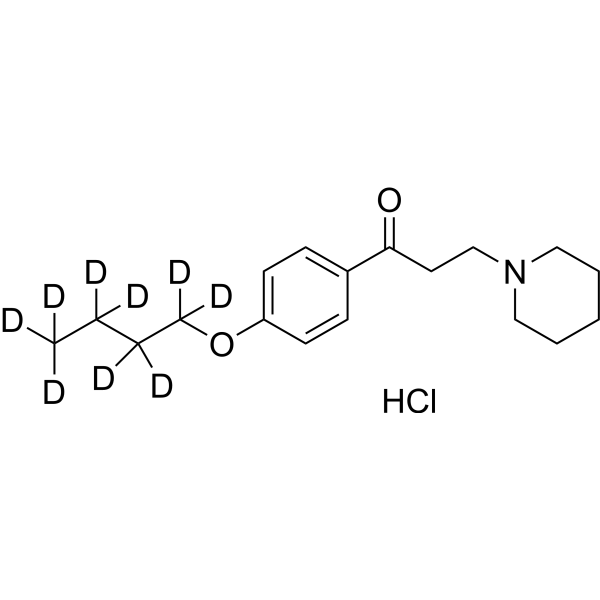 0 ImagesCat. No.: HY-B0364ASSynonyms: Dyclocaine-d9 hydrochlorideDyclonine-d9 hydrochloride (Dyclocaine-d9 hydrochloride) is the deuterated-labeled Dyclonine hydrochloride (HY-B0364A). Dyclonine hydrochloride (Dyclocaine hydrochloride) is an orally active, blood-brain barrier-permeable piperidine phenylacetone small molecule commonly used as a local anesthetic. Dyclonine hydrochloride acts as a highly selective allosteric antagonist of TRPV3; it also reversibly inhibits G9a, ALDH2 and ALDH3A1, non-competitively blocks AChE. Dyclonine hydrochloride activates the Nrf2/ARE pathway, relieves the epigenetic silencing of FXN, blocks Aβ42 aggregation, and promotes remyelination and reparative polarization of microglia. Dyclonine hydrochloride alleviates pruritus via TRPV3 inhibition; it is used in studies of neurodegenerative disease models based on its AChE inhibitory, antioxidant and remyelinating effects; it sensitizes drug-resistant tumors through ALDH inhibition, and combined use with protease inhibitors induces more tumor cell apoptosis; it inhibits Candida albicans in vitro. Dyclonine hydrochloride can be used for research on multiple diseases including neurodegenerative diseases, cancer and pruritic dermatitis.
-
ALDH3A1-IN-2
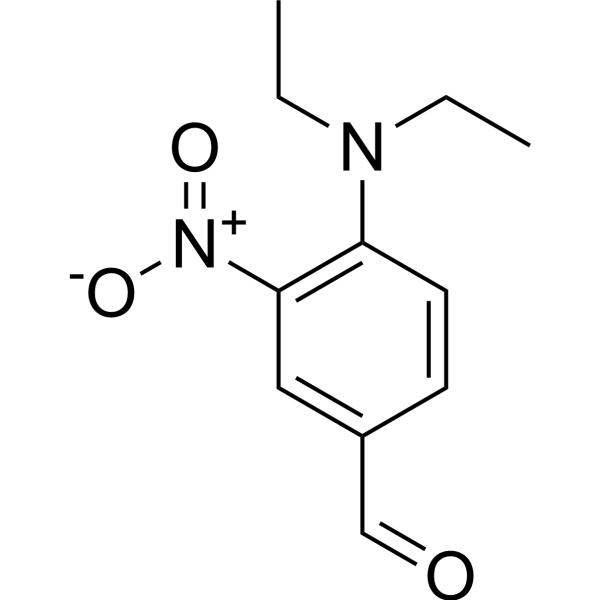 0 ImagesCat. No.: HY-144671CAS No.: 374635-48-0ALDH3A1-IN-2 (Compound 19) is a potent inhibitor of ALDH3A1 with an IC50 of 1.29 μM. Aldehyde dehydrogenases (ALDHs) are overexpressed in various tumor types including prostate cancer. ALDH3A1-IN-2 has the potential for the research of cancer diseases.
-
Dyclonine hydrochloride (Standard)
 0 ImagesSynonyms: Dyclocaine hydrochloride (Standard)Dyclonine hydrochloride (Standard) (Dyclocaine hydrochloride (Standard)) is the analytical standard of Dyclonine hydrochloride (HY-B0364A). This product is intended for research and analytical applications. Dyclonine hydrochloride (Dyclocaine hydrochloride) is an orally active, blood-brain barrier-permeable piperidine phenylacetone small molecule commonly used as a local anesthetic. Dyclonine hydrochloride acts as a highly selective allosteric antagonist of TRPV3; it also reversibly inhibits G9a, ALDH2 and ALDH3A1, non-competitively blocks AChE. Dyclonine hydrochloride activates the Nrf2/ARE pathway, relieves the epigenetic silencing of FXN, blocks Aβ42 aggregation, and promotes remyelination and reparative polarization of microglia. Dyclonine hydrochloride alleviates pruritus via TRPV3 inhibition; it is used in studies of neurodegenerative disease models based on its AChE inhibitory, antioxidant and remyelinating effects; it sensitizes drug-resistant tumors through ALDH inhibition, and combined use with protease inhibitors induces more tumor cell apoptosis; it inhibits Candida albicans in vitro. Dyclonine hydrochloride can be used for research on multiple diseases including neurodegenerative diseases, cancer and pruritic dermatitis.




